
Connect with disclosure
Pair a customer-controlled account through a short-lived QR or code and keep linked-device risks visible.
Connect a customer-controlled WhatsApp account, coordinate the shared inbox, launch consented campaigns and automate bounded workflows from one accountable workspace.
Unofficial linked-device transport · Consent required · Account restrictions remain possible
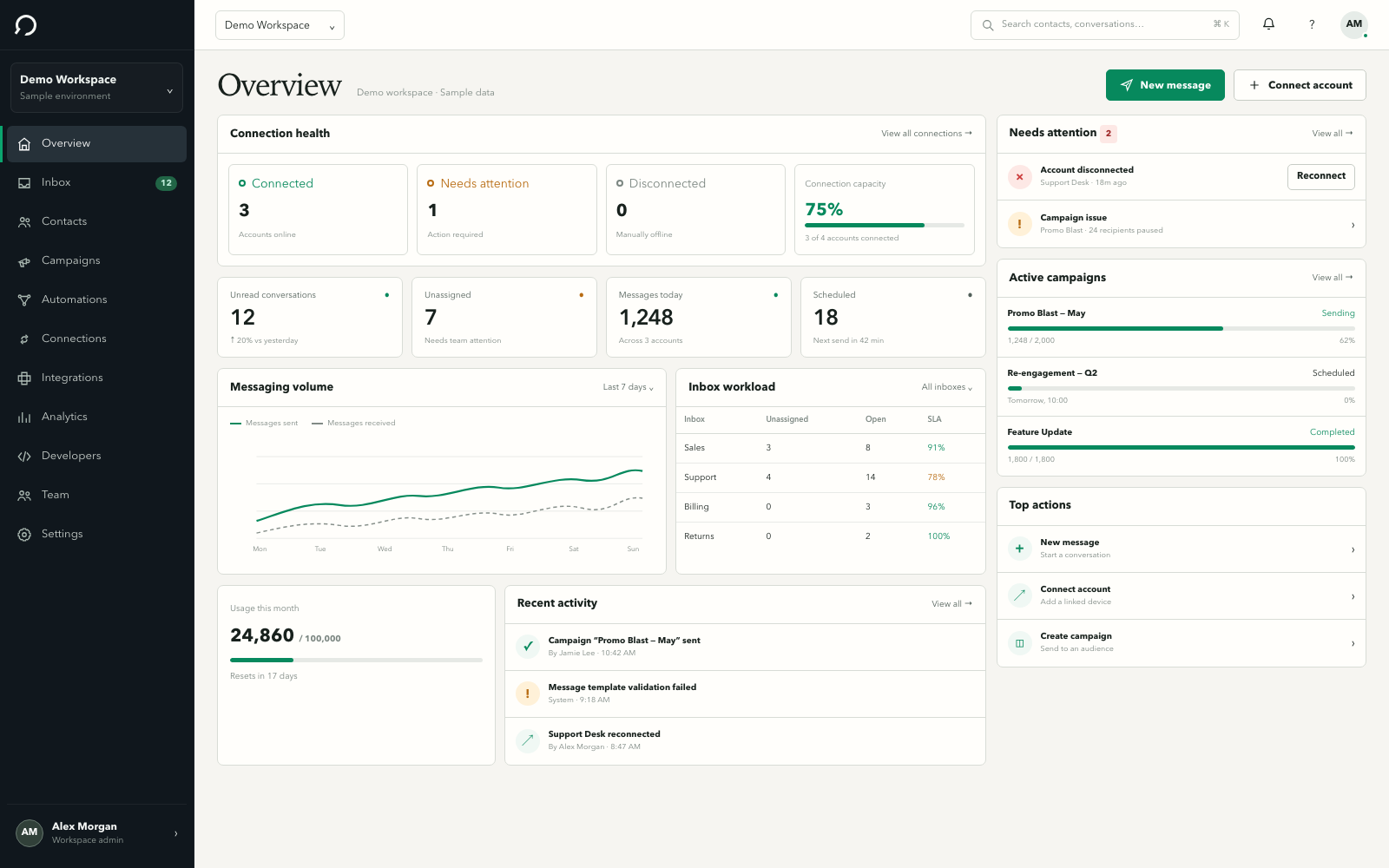
The public story mirrors the product: connect safely, work together, scale deliberately and retain only what the plan allows.
Pair a customer-controlled account through a short-lived QR or code and keep linked-device risks visible.
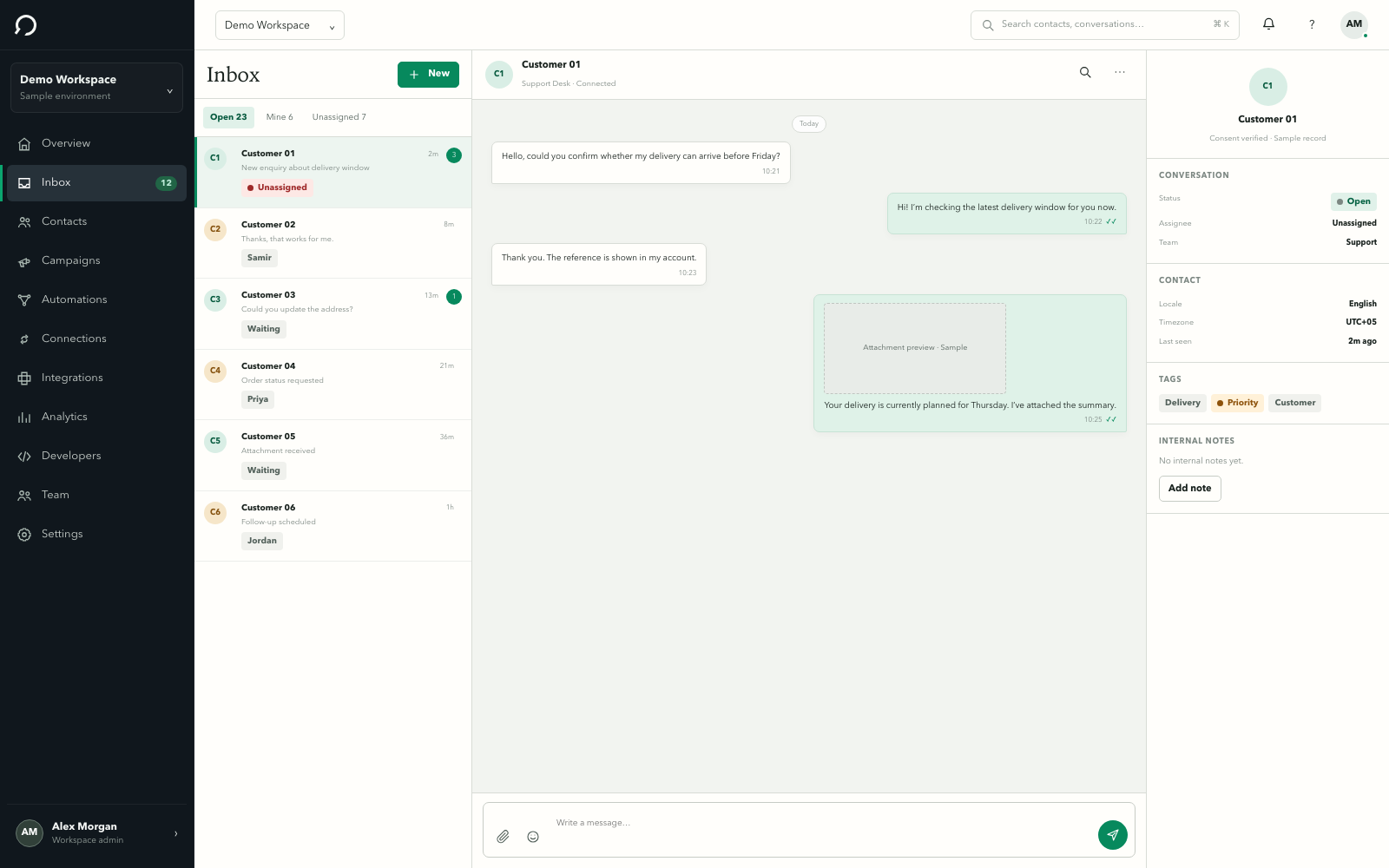
Assign owners, preserve contact context and move conversations through explicit states.
Snapshot eligible audiences, exclude suppressions and inspect recipient outcomes.
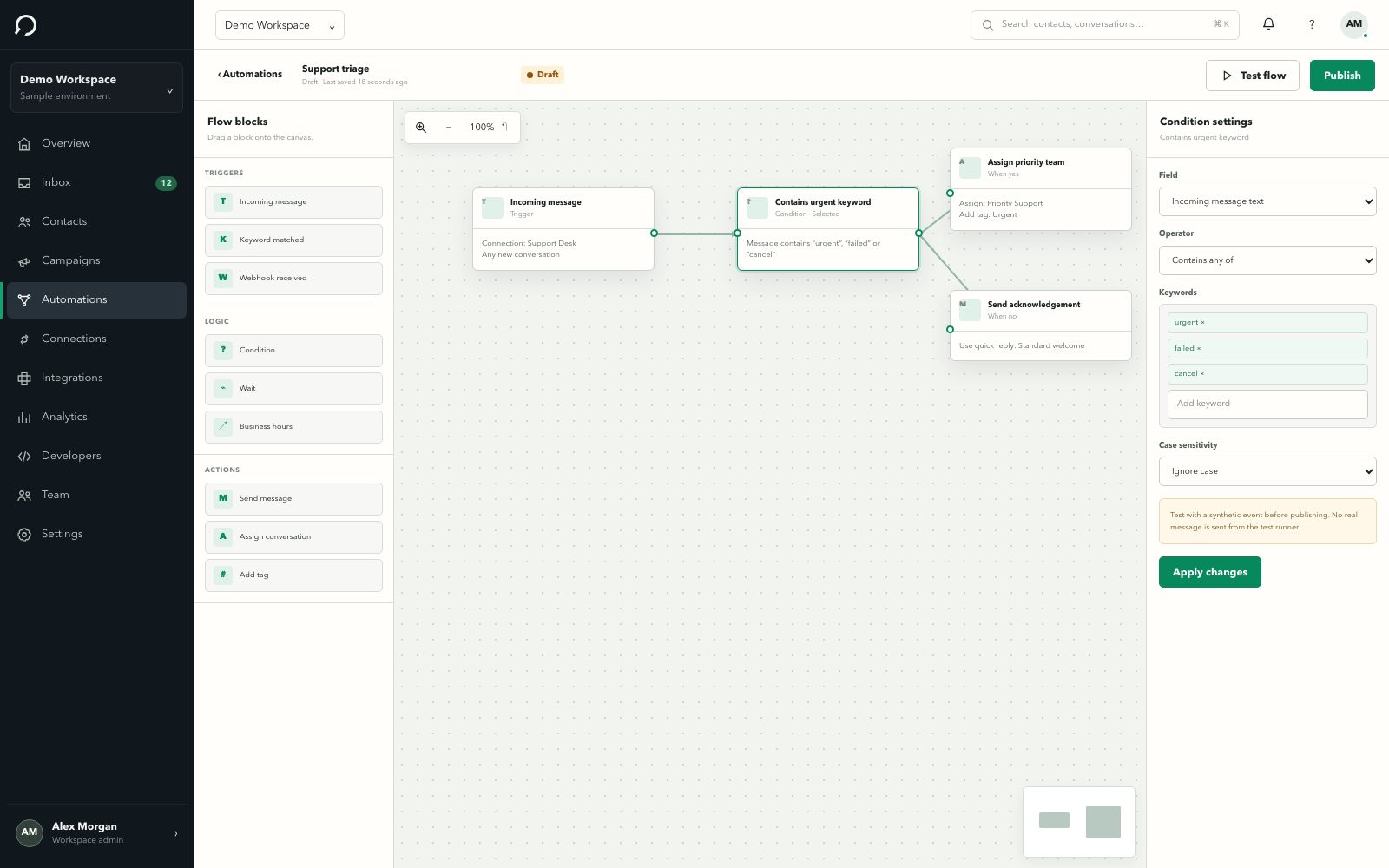
Publish versioned rules with test traces, handoff and operational logs.
Current product screens demonstrate the real interaction model customers will use.
Commercial amounts are not invented here. Final values come from the SaaS plan catalogue.
Plan-defined account, message, contact and retention capacity.
Plan-defined seats, campaigns, webhooks and media retention.
Plan-defined capacity, controls, exports and support.
No. Release one uses an unofficial WhatsApp Web linked-device connection to a customer-controlled account. The connection may be logged out, restricted or require re-pairing.
No. Customers must have a valid lawful basis and recipient consent. Suppressions and opt-outs are enforced before campaigns.
Plans, subscriptions, transactions and account management remain in the separate SaaS member portal. The product application consumes plan entitlements.
Yes. Product contracts are engine-neutral, but a future engine may require account re-pairing or a separate credential migration.
Create a workspace, read the connection disclosure and send a safe test before inviting your team.